You know what almost everyone agrees on? Aging at home.
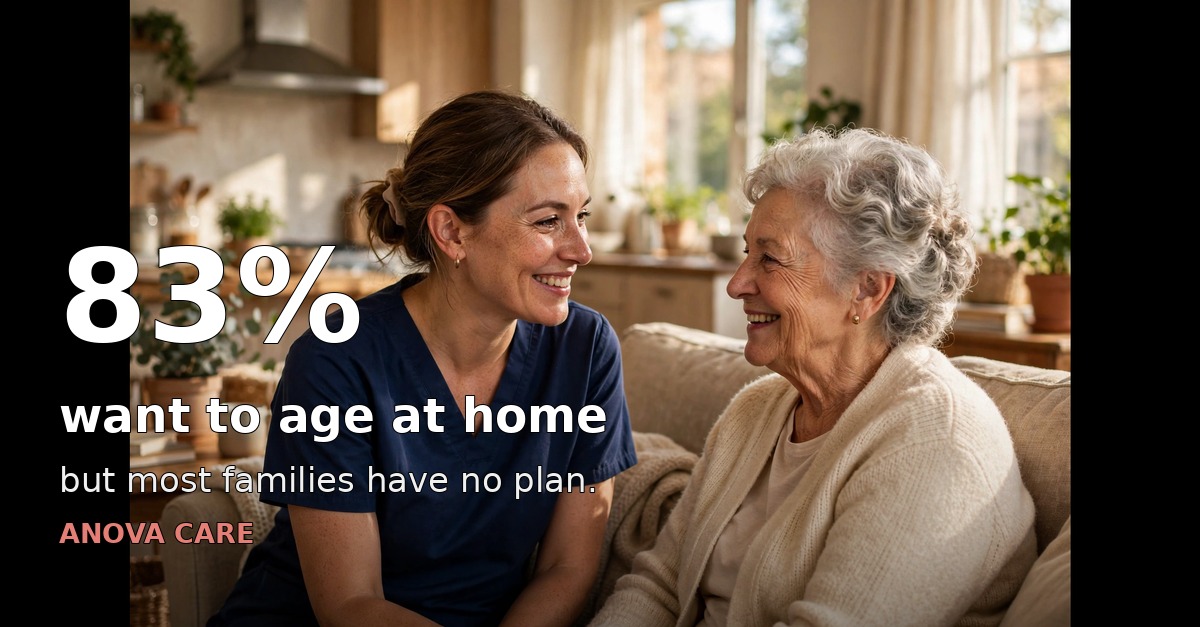
A new national study from Northwestern Mutual found that 73% of Americans would prefer in-home care if they ever needed long-term support — and among Baby Boomers, that number climbs to 83%.
That doesn’t surprise anyone who does this work. In all my years in home care, I’ve never met a client whose dream was a facility hallway. People want their own kitchen. Their own chair. Their own people around them.
Here’s the part that should stop us in our tracks: 61% of Americans expect they’ll need long-term care someday — but 54% have no financial plan for it. We can see it coming and still not be ready.
And it’s not just about us. Two out of three Gen Z and Millennials believe they’ll care for a loved one someday — and many already are. Among people providing care today, nearly 7 in 10 have taken a financial hit to do it: cutting spending, draining savings, working longer hours, even taking on debt. Caregiving is an act of love, but no one should have to sacrifice their own financial security to give it.
Then there’s the blind spot almost nobody talks about: Medicare generally does not pay for long-term care. Families discover this in the middle of a crisis — in a hospital hallway, after a fall — when the choices have already narrowed.
And the cost curve is steep. A home health aide for just eight hours a day cost about $99,000 a year in 2025. If costs keep climbing the way they have been, that same care could exceed half a million dollars a year by the late 2050s.
So what do we do with all of this?
We start the conversation early — before the crisis. We learn the difference between home care, home health, and hospice while we still have time to choose. We ask for help understanding what Medicare covers, what it doesn’t, and what options actually exist.
That’s why Anova Care exists. Not as a business plan — it was born from my own family’s real experiences. I built it so families wouldn’t have to figure this out alone, in the hardest moment of their lives.
The best time to talk about long-term care is before you need it. If your family hasn’t had that conversation yet, let today be the day.
Source: Northwestern Mutual 2026 Planning & Progress Study.
Contact us — let’s talk about what care at home could look like for your family.